
Complete Guide to AI Reinforcement Learning for Beginners
Have you ever watched a dog learn tricks? You give treats for good behavior and ignore bad behavior. The dog learns what to do by getting rewards. AI reinforcement learning works the same way.
AI reinforcement learning enables computers to make informed decisions. The computer doesn’t get a rulebook. Instead, it tries different things and learns from the results. When it makes a good choice, it gets a reward. When it makes a bad choice, it gets nothing or a penalty.
You use this technology every day without knowing it. Netflix suggests movies you might like. Your car’s GPS finds the best route. Video games have intelligent enemies. All these use AI reinforcement learning.
This guide will teach you how this amazing technology works. You’ll learn about real examples you see every day. By the end, you’ll understand why this technology is changing the world.
What Is AI Reinforcement Learning?
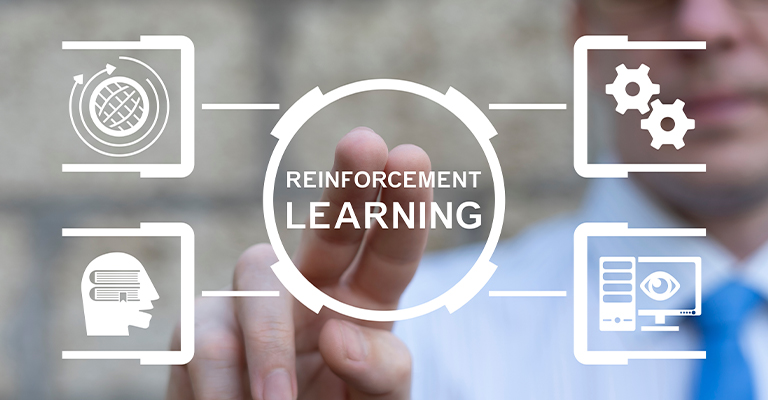
AI reinforcement learning is like teaching a computer to play a game. The computer doesn’t initially know the rules. It must figure them out by playing.
The Basic Concept
Think about learning to ride a bike. You don’t read a manual first. You get on the bike and go. When you stay balanced, that feels good. When you fall, that doesn’t feel good. Your brain remembers what worked and what didn’t work–it’s a lot like Pavlovian training.
AI reinforcement learning works similarly. The computer tries something. If it works well, the computer remembers that choice. If it doesn’t work well, the computer tries something else next time.
This is different from other ways computers learn. Usually, we show computers thousands of examples first. With AI reinforcement learning, the computer creates its own examples by trying things.
Key Characteristics
- Trial and Error Learning: The AI tests different actions to see what happens. It builds knowledge by doing things, not by reading about them. This is similar to learning to cook by experimenting with ingredients rather than just following recipes. The AI discovers what works through hands-on experience. Each mistake teaches it something valuable for next time.
- Goal-Oriented Behavior: Every AI reinforcement learning system wants to achieve something. A game-playing AI intends to win. A driving AI wants to get somewhere safely. The AI always knows what success looks like. This goal guides every decision it makes. Without clear goals, the AI would wander without purpose.
- Adaptive Decision Making: The system keeps improving its choices. It never stops learning from new experiences. Unlike traditional programs that stay the same, these AI systems evolve. They remember what worked yesterday and apply it today. The more they practice, the better they become at solving problems.
How Does Reinforcement Learning Work?

The learning process is simple but powerful. The computer follows the same steps over and over again. Each time, it gets a little bit smarter.
The Learning Cycle
- Observation: The AI sees what’s happening right now. It collects information about its current situation, like where it is and what options are available. This is like checking your surroundings before crossing a street.
- Action: It picks an action based on what it knows. The AI considers all possible choices and selects the one it thinks will work best. Sometimes it tries new things to discover better solutions.
- Reward or Penalty: The system finds out if that choice was good or bad. It receives a reward for smart decisions or a penalty for poor ones. This feedback teaches the AI about consequences of its actions.
- Learning: The AI stores this information for next time. It updates its knowledge so it can make better choices in similar situations. This memory helps it avoid repeating mistakes in the future.
Think about learning to throw a basketball. Your first shots probably miss badly. But your brain notices when you get closer to the basket. Over time, you learn the right angle and force. The AI learns the same way.
Learning Through Experience
Initially, the AI makes random choices because it lacks knowledge. However, good decisions receive rewards, while bad decisions incur penalties.
Think about learning to shoot a basketball. Your first shots will probably miss; however, your brain notices when you make baskets. Over time, you come to understand the concept of finding the right blend of trajectory and force. The AI learns the same way.
Key Components of AI Reinforcement Learning Systems

Every AI reinforcement learning system consists of four essential components. These parts work together to facilitate learning.
- The Agent: This is the “brain” that makes decisions. In a chess game, the agent decides which piece to move. It’s like a student in a classroom.
- The Environment: This is everything around the learner. In a video game, it’s the game world with all its rules. It’s like a classroom where learning takes place.
- States and Actions: States are what’s happening right now (like where you are in a maze). Actions are what you can do (like turn left or right).
- Reward System: This gives points for good choices and takes away points for bad decisions. It’s like getting grades on a test.
The reward system is critical. If you design it wrong, the AI might learn the wrong thing. It’s like giving someone points for cheating instead of studying.
Types of Reinforcement Learning Algorithms
Different algorithms solve various types of problems. Each approach has unique strengths and applications in AI reinforcement learning.
- Value Learning: The AI learns how good each choice is. It maintains a scorecard that shows which actions work best in each situation. Then it picks the action with the highest score. Think of it like rating restaurants on a scale of 1-10 stars based on your experiences.
- Strategy Learning: The AI learns a plan or strategy directly. Instead of scoring each action, it learns the best overall approach to the problem. This is akin to learning chess by understanding opening moves and general tactics, rather than memorizing every possible game situation.
- Mixed Learning: This combines both methods above. One part learns the strategy while another part grades how well it’s working. This often works better than using just one method. It’s like having both a game plan and a coach evaluating your performance simultaneously.
Mixed learning is popular for robots and advanced games because it effectively handles complex situations.
Real-World Applications You Use Every Day

AI reinforcement learning is everywhere in your daily life. Here are some examples you probably use without thinking about it.
- Movie and Music Suggestions: Netflix learns what you like by watching your choices. When you finish a movie or skip a song, the AI learns about your taste. Then it suggests things you might enjoy.
- Self-Driving Cars: These cars learn to drive by practicing millions of times in computer simulations. They learn to park, merge into traffic, and avoid accidents by getting rewards for safe driving.
- Video Game Characters: Smart enemies in games use this technology. They observe how you play and adjust their strategy accordingly. This makes games more challenging and fun.
- Stock Trading: Some computer programs trade stocks using AI reinforcement learning. They learn which trades are profitable by studying market patterns and receiving rewards for successful trades.
These examples demonstrate how AI reinforcement learning adapts to your behavior and improves over time.
Benefits and Challenges in Implementation
Like any technology, AI reinforcement learning offers advantages while presenting specific difficulties. Understanding both sides helps you make informed decisions.
Major Benefits
- No Labeled Data Required: Unlike other AI methods, you don’t need thousands of examples to start. The AI creates its own examples by trying things. This saves time and money because you don’t have to collect huge datasets before beginning your project.
- Adaptability: The system can handle new situations it has never seen before. This makes it perfect for unpredictable environments. When conditions change unexpectedly, the AI adjusts its behavior automatically instead of breaking down or making terrible decisions.
- Optimal Decision Making: Given enough time, AI reinforcement learning can find the perfect strategy for any problem. It explores all possibilities systematically and discovers the most efficient approach. This often leads to solutions that humans never would have thought of.
Common Challenges
- Sample Inefficiency: Learning through trial and error is slow. The AI might need millions of tries to get good at something. Think of learning to play piano – you need thousands of hours of practice to become skilled. The AI works the same way but much faster than humans.
- Reward Design Complexity: Creating the right reward system takes skill and experience. Bad rewards can make the AI learn the wrong behaviors completely. It’s like giving students points for showing up instead of learning – they’ll focus on attendance rather than understanding the material.
- Computational Requirements: Training these systems requires expensive, fast computers with lots of memory. This can cost too much money for small companies or schools. The computers must run calculations millions of times per second to make the learning process work properly.
Despite these challenges, the benefits often outweigh the difficulties. Consequently, many companies invest heavily in this technology for competitive advantages.
Getting Started: Your First Steps

Beginning your journey in AI reinforcement learning doesn’t require advanced degrees. However, you’ll need dedication and the right learning approach.
Essential Prerequisites
- Basic Programming Skills: Python is the most popular language for AI. Start with simple programming concepts and practice regularly. You don’t need to be an expert programmer, but you should understand how to write basic code, use variables, and create simple functions.
- Mathematics Foundation: Understanding averages, percentages, and graphs will help a lot. You don’t need advanced math to start. Focus on statistics concepts like mean and probability. These math skills help you understand how the AI makes decisions and measures its performance over time.
- Machine Learning Basics: Learn the basics of machine learning before focusing on reinforcement learning specifically. Understand how computers can recognize patterns in data and make predictions. This background knowledge makes reinforcement learning concepts much easier to grasp when you start studying them.
Recommended Learning Path
- Complete Online Courses: Coursera and Khan Academy have great beginner courses. Start with the basics and work your way up.
- Practice with Simple Projects: Use free tools like OpenAI Gym to test your ideas. Start with easy games like tic-tac-toe.
- Build Complex Projects: Once you understand the basics, try more challenging problems. Build up your skills step by step.
- Join Communities and Compete: Connect with other learners online. Join competitions and ask questions when you get stuck.
Useful Tools and Resources
Popular programs like TensorFlow and PyTorch make development much easier by handling the complex math calculations for you. These free tools provide ready-made building blocks so you don’t have to write everything from scratch. Think of them like using a calculator instead of doing long division by hand.
Many websites offer step-by-step tutorials that show you exactly how to use these programs. YouTube has thousands of free videos that explain concepts using simple examples. Online documentation acts like instruction manuals that help you when you get stuck on specific problems.
GitHub is a website where programmers share their code with others for free. You can download working examples and modify them for your own projects. This saves you time and helps you learn by seeing how experienced developers solve similar problems.
Career Opportunities in This Field

AI reinforcement learning expertise opens doors to exciting and well-paying career opportunities. The demand for skilled professionals continues growing rapidly.
High-Demand Roles
- AI Developer: Build AI systems for companies. These jobs pay well and are available at most tech companies. You write code that helps computers learn and make smart decisions for different business problems.
- Research Scientist: Create new AI methods and improve existing ones. Universities and research labs hire people for these positions. You spend time discovering better ways for computers to learn and solve difficult problems.
- AI Consultant: Help businesses use AI to solve their specific problems. This job combines computer skills with understanding how businesses work. You visit different companies and show them how AI can make their work easier.
Industry Sectors
- Technology Companies: Google, Apple, and Microsoft all use AI reinforcement learning in their products. They need developers to improve search engines, voice assistants, and smartphone apps.
- Healthcare: Hospitals use this technology to help doctors make better treatment decisions. AI helps analyze medical images and suggest the best treatments for patients.
- Finance: Banks use AI to catch people who try to steal money and make smart investment choices. The technology helps protect customers and grow their savings.
- Robotics: Factories use smart robots that learn how to build things better and faster. These robots can adapt when production needs change or problems occur.
These fields offer excellent growth potential as businesses increasingly recognize the value of intelligent, adaptive systems.
Conclusion
AI reinforcement learning represents a fundamental shift in how machines acquire knowledge and make decisions. Unlike traditional programming approaches, this method enables computers to learn through experience and adapt to changing conditions.
Throughout this guide, we’ve explored the core concepts that make AI reinforcement learning so powerful. From understanding the basic learning cycle to examining real-world applications, you’ve gained insights into this transformative technology. Moreover, you’ve discovered practical steps for beginning your own learning journey in this exciting field.
The applications we see today are just the beginning. As computational power increases and algorithms improve, AI reinforcement learning will solve even more complex problems. Consequently, professionals with expertise in this area will find themselves at the forefront of technological innovation.
Whether you’re interested in developing the next breakthrough in autonomous vehicles or creating more engaging entertainment experiences, AI reinforcement learning provides the foundation. The journey requires dedication and continuous learning, but the rewards – both intellectual and financial – make it worthwhile. Start your exploration today, and you’ll be amazed at what you can accomplish with patience, practice, and the right guidance.